What AI in construction management actually does for Australian builders and developers, where it pays off first, and how to adopt it without the hype.
Construction has spent two decades digitising plans, schedules and site records. The newer shift is that artificial intelligence can now read those records and act on them. Models that summarise a thousand-page contract, flag a clash between two drawing sets, or warn that a subcontractor is about to slip are no longer demos. They are running on live projects, and Australian builders are asking a sharper question. Where does this actually save money, and where is it just noise.
This piece looks at AI in construction management from the seat of a mid-sized Australian builder or developer, not a global contractor with an innovation lab. The technology is real. The skill is choosing the two or three places it earns its keep first.
What AI in construction management actually does
For most builders, three capabilities matter.
The first is reading documents. Contracts, requests for information, variations, specifications and drawings are where projects leak time. A model can summarise a head contract, pull every clause that touches a payment timeframe, or compare two revisions of a drawing and list what changed. That work used to sit with a senior person on a Friday night.
The second is predicting problems. The leading indicators of a blown programme or budget are usually already in your data, in the rhythm of RFIs, the pattern of variations, the weather, and the history of each subcontractor. AI is good at spotting those patterns earlier than a fortnightly report does.
The third is automating admin. Progress claims, daily diaries, RFI responses and compliance paperwork are repetitive and rules-based, which is exactly what these tools handle well.
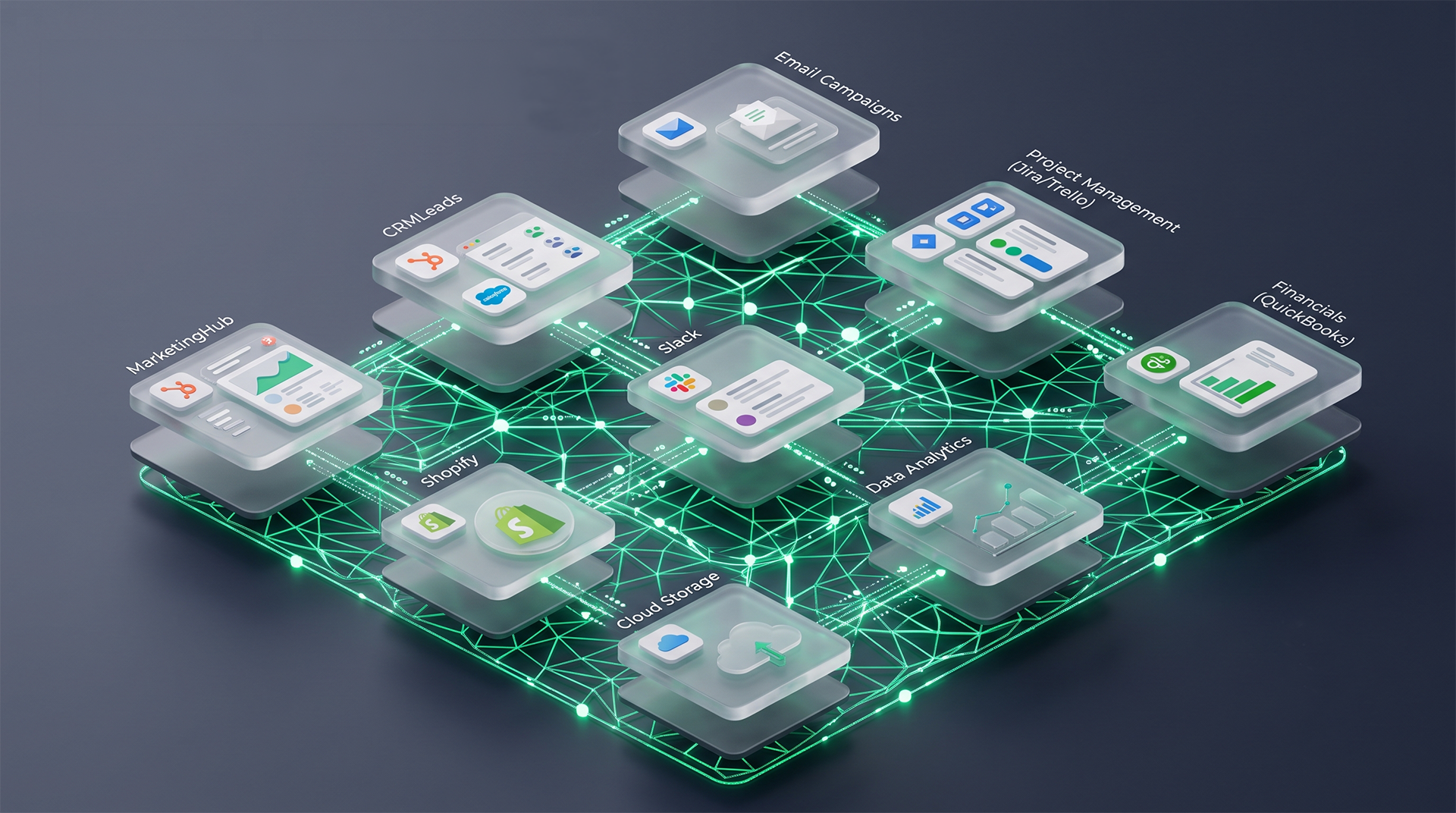
The point worth holding onto is that there is no single “construction AI” to buy. The value comes from narrow tools wired into the systems you already run, so the output lands where your team already works.
Where it pays off first
Start where the work is document-heavy, repetitive and deadline-driven, because that is where the saving is both large and easy to measure.
Variation and RFI triage is a common first win. Drafting a first response, attaching the relevant clause and routing it to the right person turns a slow queue into a fast one. Progress claim preparation is another, because the inputs are structured and the deadlines are fixed. Tender and subcontract review pays off for developers who read a high volume of similar documents and need the differences surfaced quickly.
In our work with builders and developers, the pattern that holds is narrow first. One workflow, a clear before-and-after measure, and an honest read after a month. That beats a broad rollout that nobody trusts.
The compliance and safety reality
This is where construction is different from a generic office. An AI that drafts a payment claim still has to produce a claim that meets the relevant Security of Payment legislation, such as the Building Industry Fairness (Security of Payment) Act in Queensland, including its strict timeframes. An AI that helps with a safety report does not change your duties under the model Work Health and Safety laws and Safe Work Australia guidance. Anything that touches the building itself still has to satisfy the National Construction Code.
There is also the data question. Project records, subcontractor details and incident reports are sensitive, and the Privacy Act 1988 applies to how you handle personal information. The safe pattern is to keep a person accountable for anything that leaves the business or carries legal weight, and to use AI to prepare the work, not to file it unchecked.
How a Queensland builder would actually start
Pick one bottleneck. Map how it works today, including who touches it and how long it takes. Put a narrow tool against that single workflow, connected to the software you already use, and run it in parallel with your current process for a few weeks so you can compare. Keep a person in the loop for anything with a compliance or payment consequence. If it saves real hours, expand to the next workflow. If it does not, you have lost very little.
If you want to see how this maps to specific services, our artificial intelligence work covers the build and integration side, and process optimisation for construction and property development covers the workflow redesign that makes the tooling stick. Our view of the sector sits on the construction and property development page.
What this means for you
AI in construction management is past the hype stage and into the boring, useful stage, which is the good stage. The builders who benefit are not the ones who buy the biggest platform. They are the ones who pick a single document-heavy workflow, measure it honestly, and keep a person accountable for the parts that carry legal or safety weight. Start there, and the rest follows.