

Insights & articles
Perspectives on adopting AI well — practical, outcome-focused thinking for leaders moving into GenerationAI.

The Air Canada ruling and the frontier labs liability debate show every Australian business what AI governance they need before something goes wrong
Air Canada was held liable for its chatbot's mistakes and frontier labs are losing liability protection bids. What Australian businesses need to know.
Read the article
A goal-trained model treats every file it can reach as fair game, so the controls that matter are what you connect and what you wrap around it
A goal-trained AI uses every file you connect it to. What you control is what the model can reach and the harness you put around it.

Your Tools Do Not Talk to Each Other
Tool sprawl and double entry are the real blockers to AI in small businesses. Fix the foundation first, then build AI on top of it.

Before You Post That Job Ad, One Question Worth Asking
Before hiring a tech manager, 11-50 staff businesses should ask whether a whole AI team on Units costs less than one mid-level hire.

Where Do I Start With AI?
Paralysed by where to start with AI? One diagnostic question cuts through the noise. Here's how to find your starting point in under five minutes.

Everyone is selling you tools. What you need is a partner and a roadmap.
Vendor pile-up is draining ops directors at growing businesses. Here is what it looks like to stop buying tools and start buying outcomes instead.

Your data is your edge. How do you use AI without risking it?
Mid-market firms with real IP and client records don't have to send their data away to use AI. Sovereign and hybrid deployment keeps your edge in-house.

You Don't Need to Pick the Best AI Model
General managers feel pressure to pick GPT-4, Claude, or Gemini. This piece explains why model choice matters far less than what surrounds it.

Your Reps Spend a Day a Week Not Selling
Sales reps lose roughly a day a week to admin. This task audit helps heads of sales find the one workflow eating the most hours and fix it first.

Consultants Are Advising on AI and Haven't Used It Themselves
Consulting directors advise clients on AI adoption daily but haven't run it in their own practice. Here's the concrete first move to fix that.

What's the Best AI for a Sales Team? It Depends on One Thing
Revenue leaders ask which AI is best for sales. The answer isn't a vendor name. It's one evaluation criterion that cuts through the noise every time.

Most AI department budgets get approved before anyone has proven what the AI function should actually do: here's the question to ask first
Chief change officers at 200-plus-staff businesses are signing off on AI headcount before proving what the function should do. One question changes that.

Five signs your firm is falling behind on AI, in matter-file terms
Five concrete signs a law firm is falling behind on AI, written in the language of matter-file pain that principals and managing partners already recognise.

AI Is Not a One-and-Done Project
A fixed-scope AI project delivers a result, then leaves. Here's why AI requires continual optimisation to keep working, and what a Technology Partner does.

Most small business owners know AI could help them. The part that stops them is not having anyone to figure out where to begin.
No IT person, no clear starting point, no time to work it out. Here's why that's not a gap you fill by hiring, and what to do instead.

Search that only finds similar-looking documents can't follow a question through four of them, and that is what keeps AI agents from working on their own.
AI agents stall on questions that run across several internal documents. Mapping how your data connects is what makes those answers reliable.
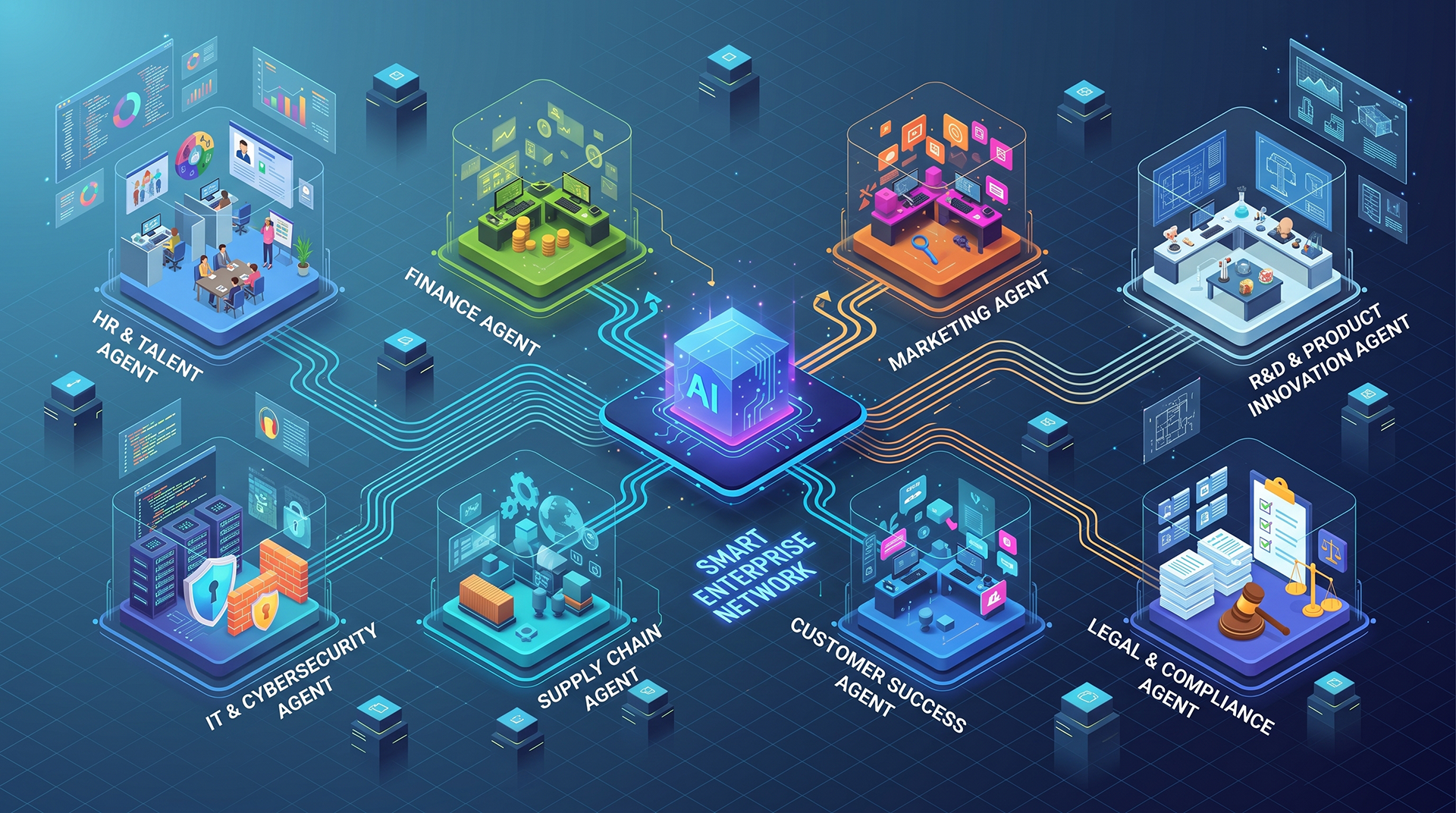
New research shows that putting AI agents on the org chart blurs who is accountable, and the fix is a tight role with scoped access rather than a friendly first name
New HBR research shows calling an AI agent an employee lowers review quality and blurs accountability. Give agents a scoped role instead.

The gains from AI now come from the context you feed it, and most of that context is still sitting in your team's heads
The next gains from AI come from the context you feed it, not the model you pick. Most of that context is still sitting in your team's heads.

Get yourself an AI champion, its the way to get real value from AI
The returns from AI come from one person owning the decisions and the build. Here's what that role does, what it's worth, and how to get it affordably.

The hardest part of AI is choosing where to point it first, and most businesses have nobody whose job that is
Most SMBs can't afford a full-time AI lead, so the first step never gets chosen. A technology partner brings that judgement at a fixed monthly cost.
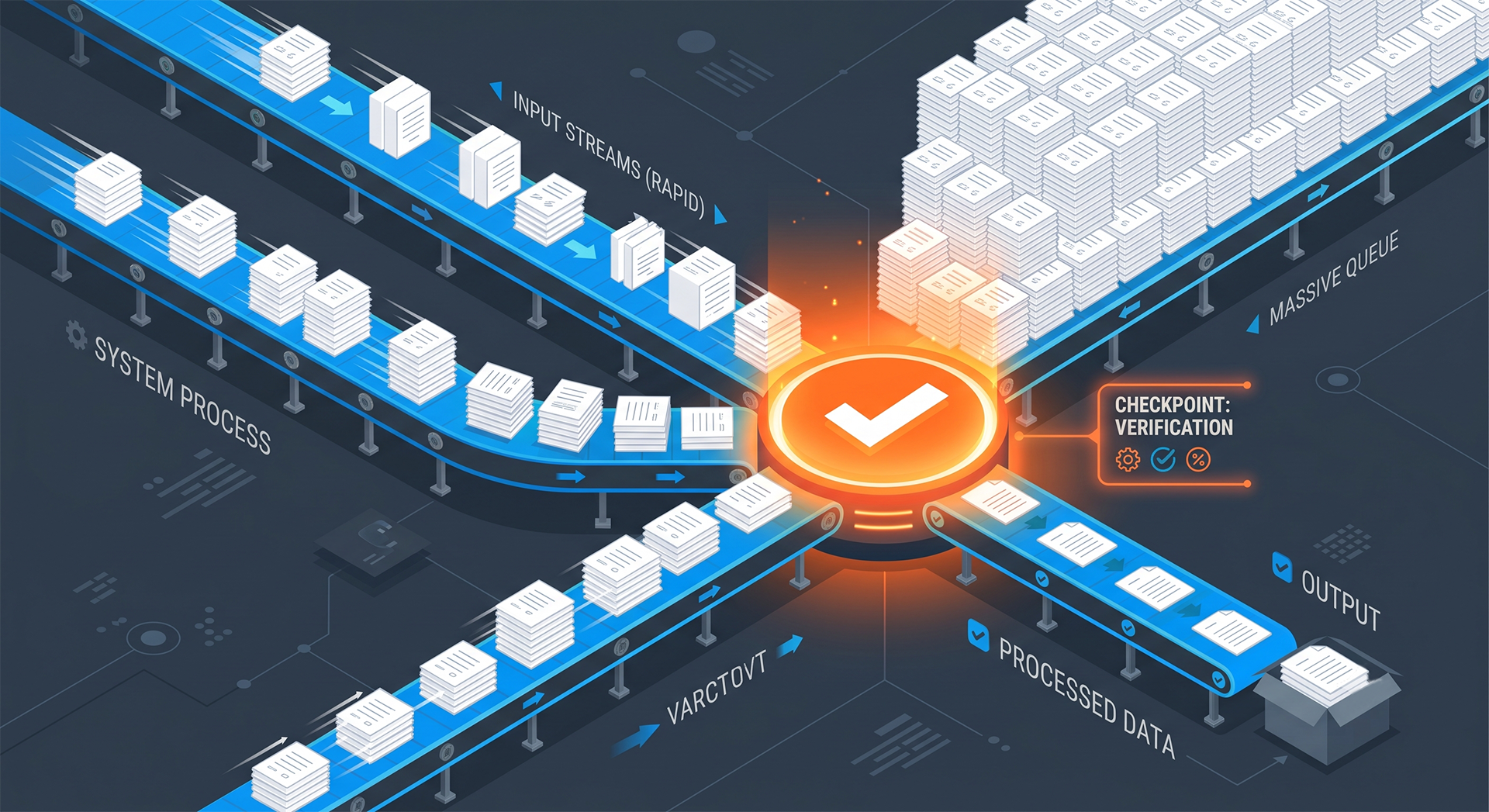
The best research on AI at work keeps finding the same thing, which is that AI amplifies the process it lands in rather than fixing it
AI amplifies the process it lands in. The evidence from software shows why speeding up one step rarely speeds up the business, and what to check first.

The biggest AI buyers in the world have stopped shopping for models and started collecting context, and that changes where a small business should spend its money
Palo Alto's CEO says average AI intelligence will be free and context is the real advantage. What that means for an Australian small business.

Open-weight models are cheap enough to try different approaches, which means you can redesign the work rather than speed up steps that were shaped for people
Most business processes are shaped around what a person can follow. Open-weight models are cheap enough to test a better approach.
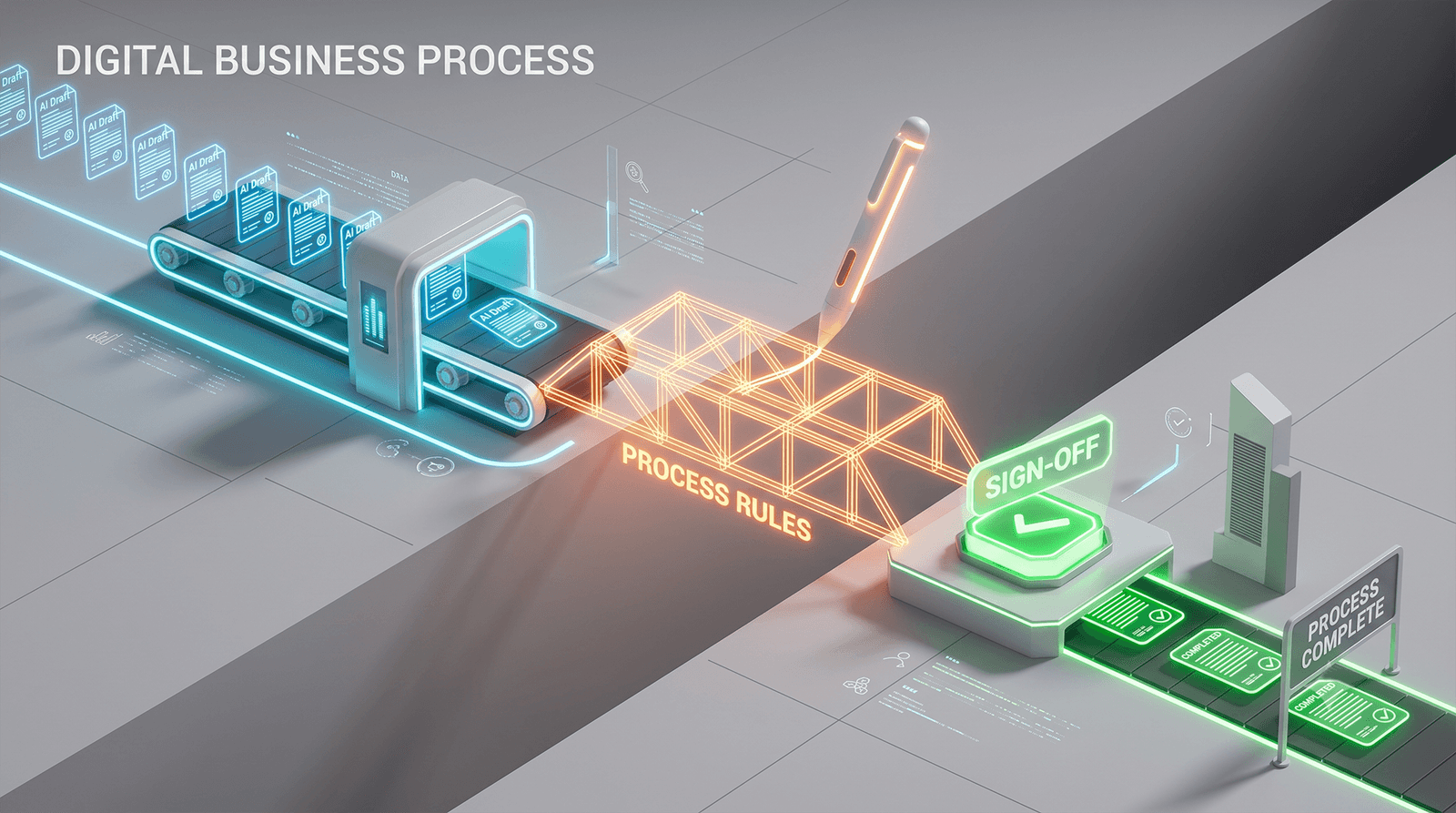
The tools finish part of a task and hand the job back. Closing that gap starts with writing down what your people already do without thinking
Off-the-shelf AI finishes a task and hands the job back. Closing the loop starts with documenting the work your people do without thinking.
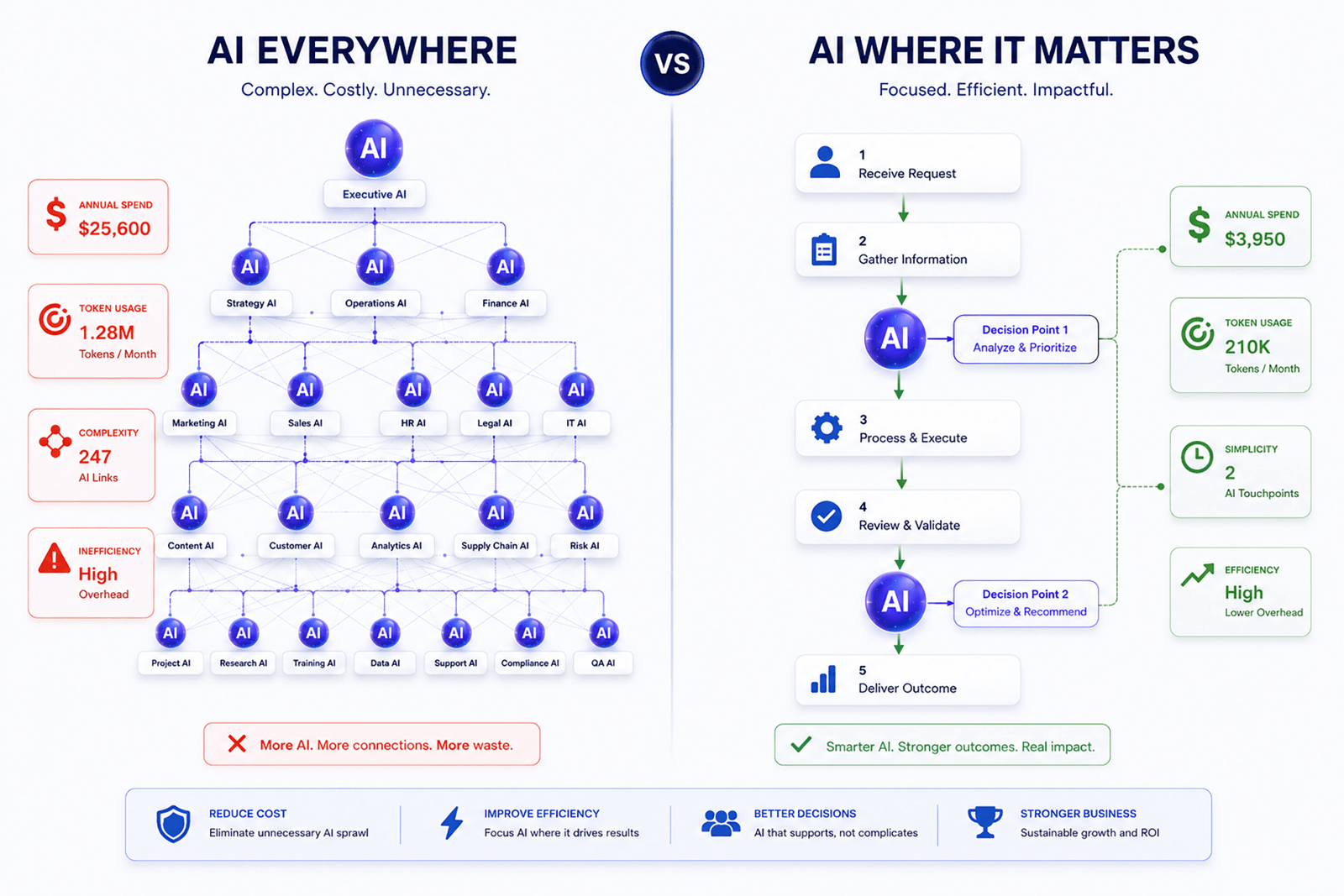
Copying an org chart into a swarm of agents skips the process underneath it, and the bill turns up long before the value does.
Agent swarms copy an org chart and skip the process underneath. Map the work, put agents where decisions get made, and measure what they cost.

Small businesses are getting more out of AI than big enterprises because they can actually make decisions, and the gap between trying AI and building it into your workflows is where the value sits.
Most small businesses already use AI, but few have built it into their workflows. Why Australian SMEs move faster than enterprise, and where to start.

The strongest case for AI agents isn't the cost per task. It's that your people stop paying the switching tax.
Australian workers lose hours every week switching between tools. The real value of AI agents is that your people stop carrying that load.
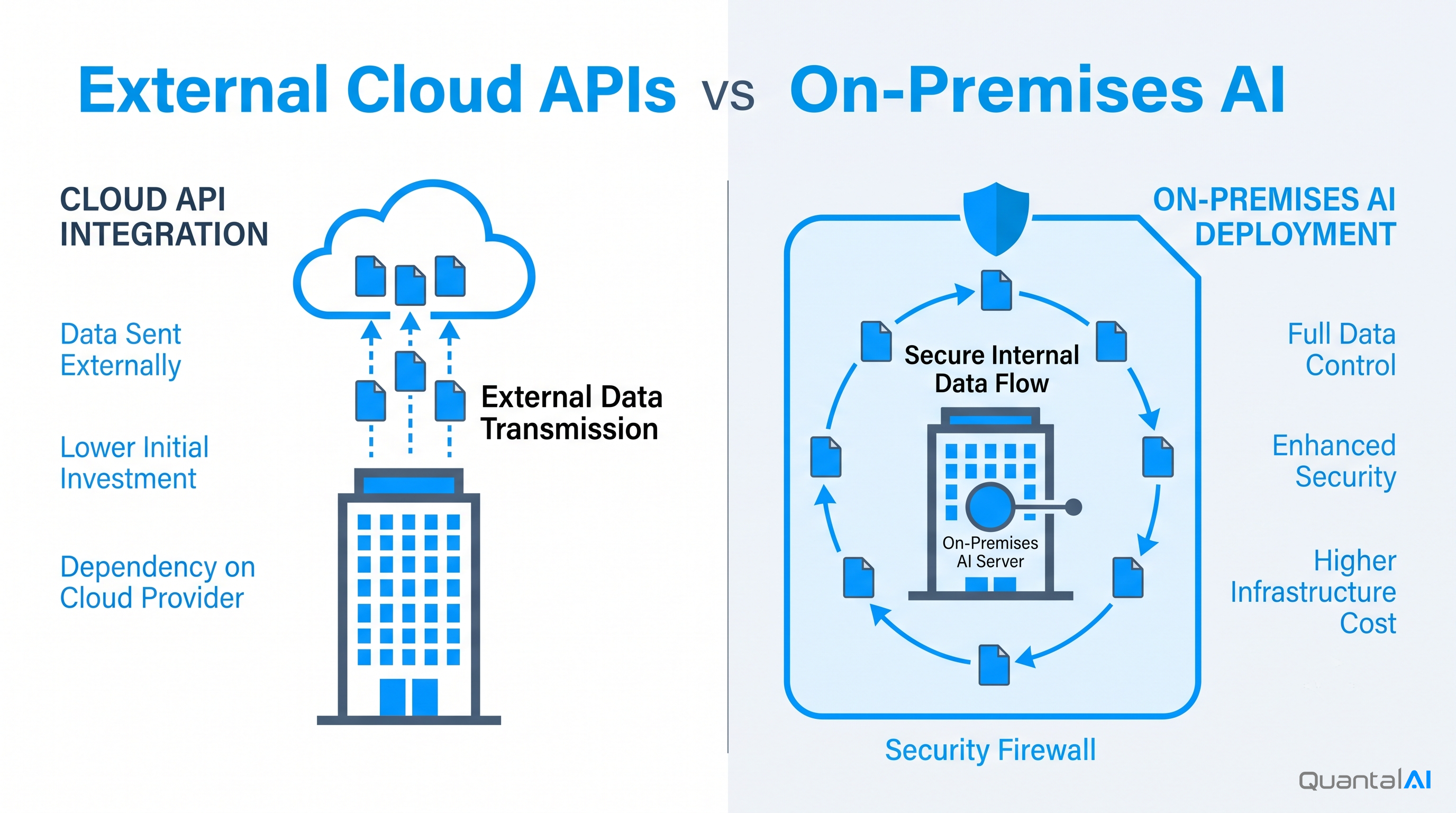
The case for open weight models on your own hardware is control over your data and a price nobody else can change, not a smaller token bill
Open weight models on your own hardware aren't about cheaper tokens. They're about client data that never leaves, and a price nobody else can change.
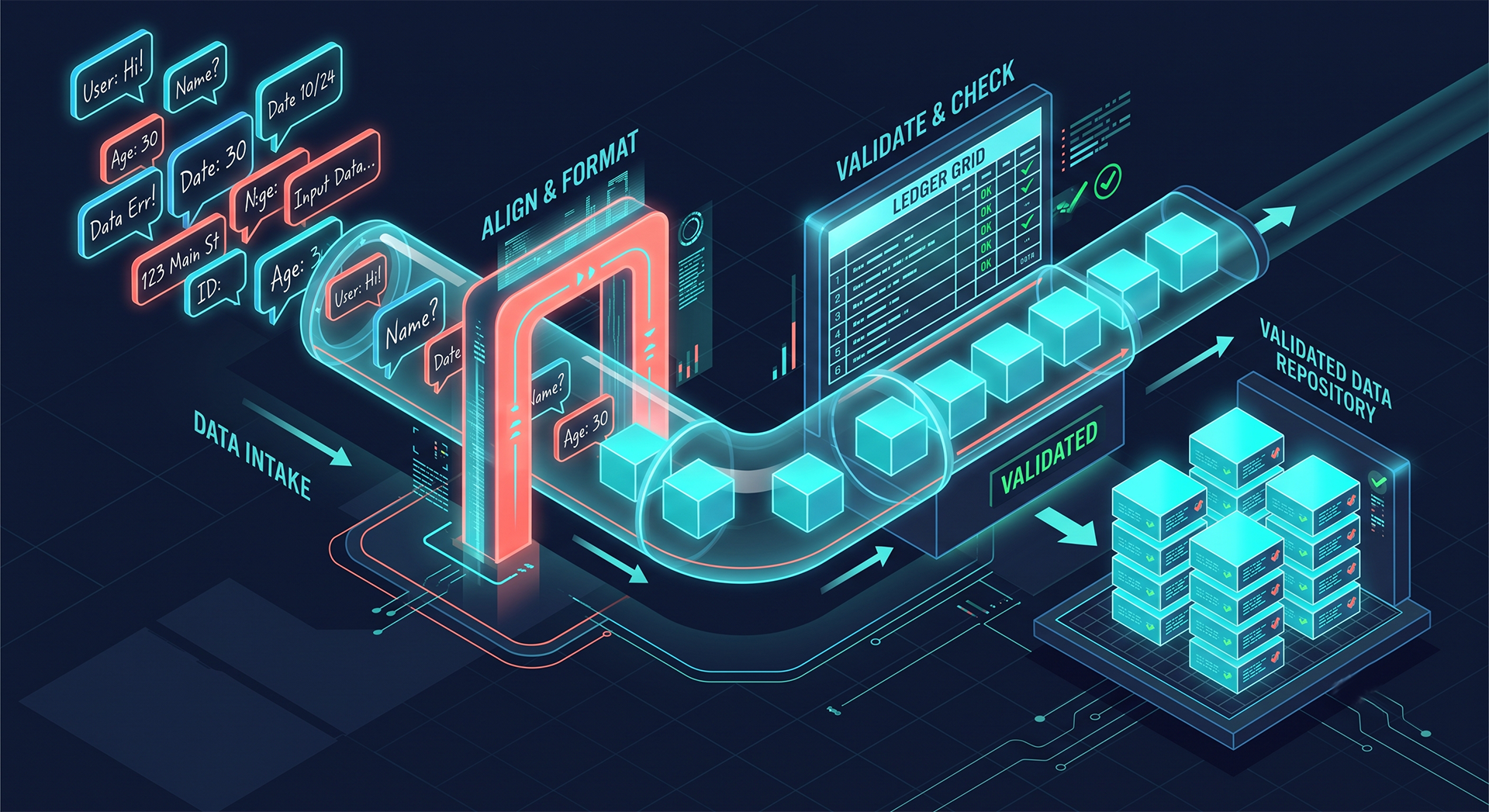
Ask the same thing two different ways and a model gives you two different answers, so the fix is a check around the model rather than a better prompt
Ask AI the same thing two ways and you get two answers. Here's how a checking layer keeps the result consistent, whichever model you use.

Automate the routine work, and the people who understand your customers become the most valuable part of your business.
AI can automate much of your business, but it can't run it. The people who know your customers are what keep your work valuable.

Before the next job ad goes out, it's worth asking whether the role is a hire or a set of Units.
Before you post that job ad, ask one question. A whole team on Units ramps up in a business day, with no onboarding lag and no knowledge walking out the door.

The tow truck lesson for choosing AI, and what a Technology Partner does instead of selling you the best tool.
Most AI vendors sell you the best tool. A Technology Partner just handles it, learns your business, and builds AI in for the cost of about one employee.

Handing your whole team AI licences felt like getting ahead, but without integration and measurement there's no way to prove it returned anything.
Australian teams bought whole-team AI licences with no way to measure the return. Why that isn't real change, and how to make the spend count.

Open models with capabilities like Kimi K3 mean you can run frontier-class AI on your own data, for a cost you control instead of a bill that keeps climbing.
Kimi K3 is the first open-source model in the 3-trillion class. Here's what running frontier AI on your own data means for Australian businesses.

The same review habit a research lab used to improve its own AI can make the AI your business already runs cheaper and better every month.
Weco got a top AI model to improve its own AI. The same review habit can make the AI your business already runs cheaper and better each month.

A national AI framework is coming, but what Australian small and medium sized business needs most is support to adopt AI, not another agency to answer to.
The federal government is building a national AI framework. Here's what it means for Australian small and medium sized business, and why support beats more red tape.
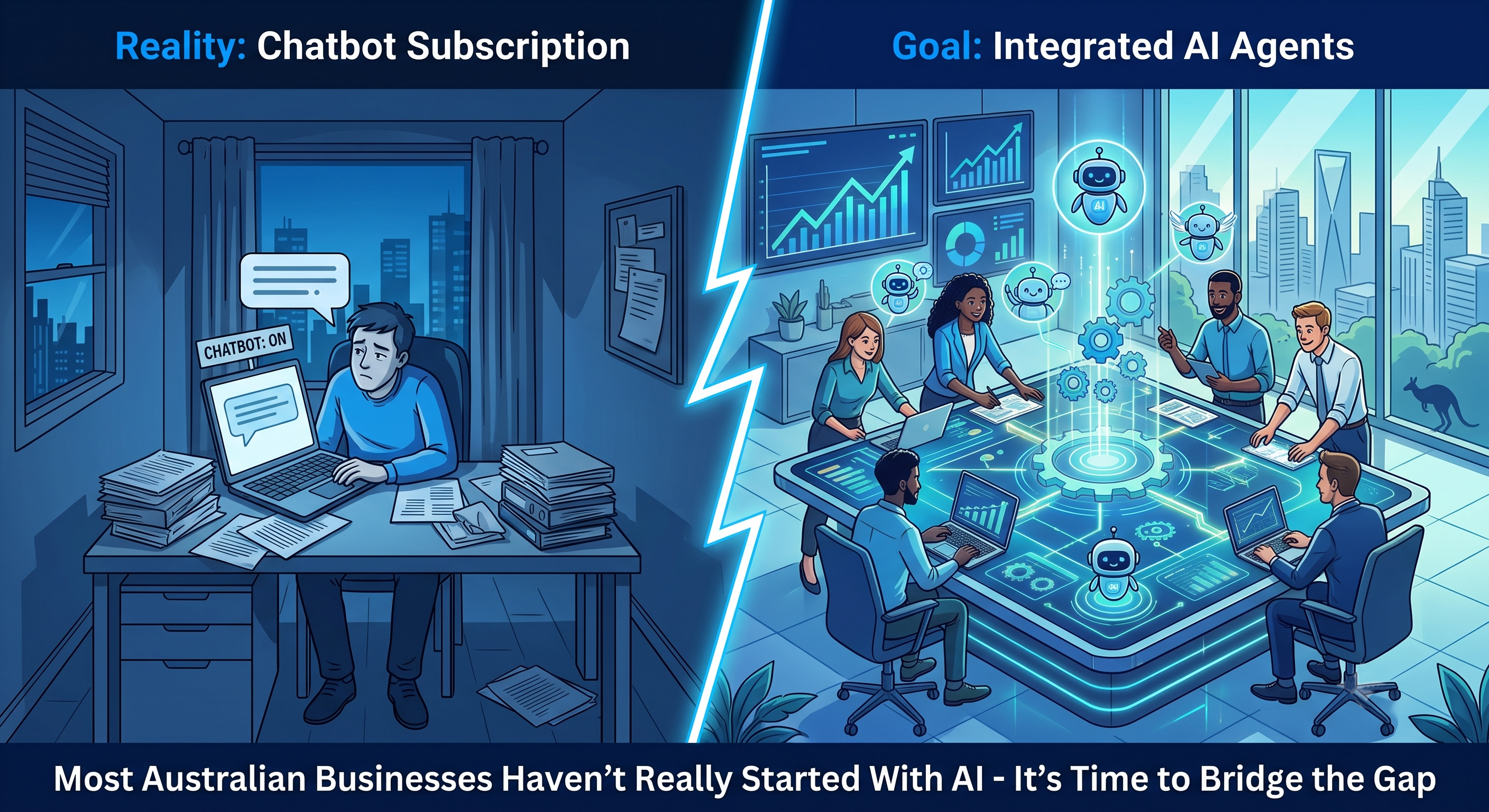
A new government report shows AI hasn't cut Australian jobs, and the likeliest reason is that most businesses haven't put it to work properly yet.
Australia's first major report says AI hasn't cut jobs. The real reason is most businesses haven't properly implemented it yet.

The Palantir and NVIDIA sovereign AI deal is aimed at governments, but the reasons behind it matter just as much to a smaller business.
Palantir and NVIDIA's sovereign AI deal targets governments, but keeping control of your data, costs, and edge matters for smaller firms too.

A large US study found the heaviest AI spenders grew their teams rather than cutting them, and there's a lesson in it for smaller Australian firms.
A US study of 21,559 firms found the heaviest AI spenders grew headcount 10.2% in two years. Here's what that means for smaller Australian businesses.

Your AI keeps getting it wrong because it cannot see the information the job depends on, not because the model is weak
Most AI tools underperform at work because they lack context, not because the model is weak. What the 2026 Work AI Index shows about closing the gap.

The people bending your AI rules are usually the ones getting the most out of AI, which makes their workarounds worth reading.
The 2026 Work AI Index shows your best staff break AI rules most. Here's why those workarounds are a signal to read, not a problem to shut down.
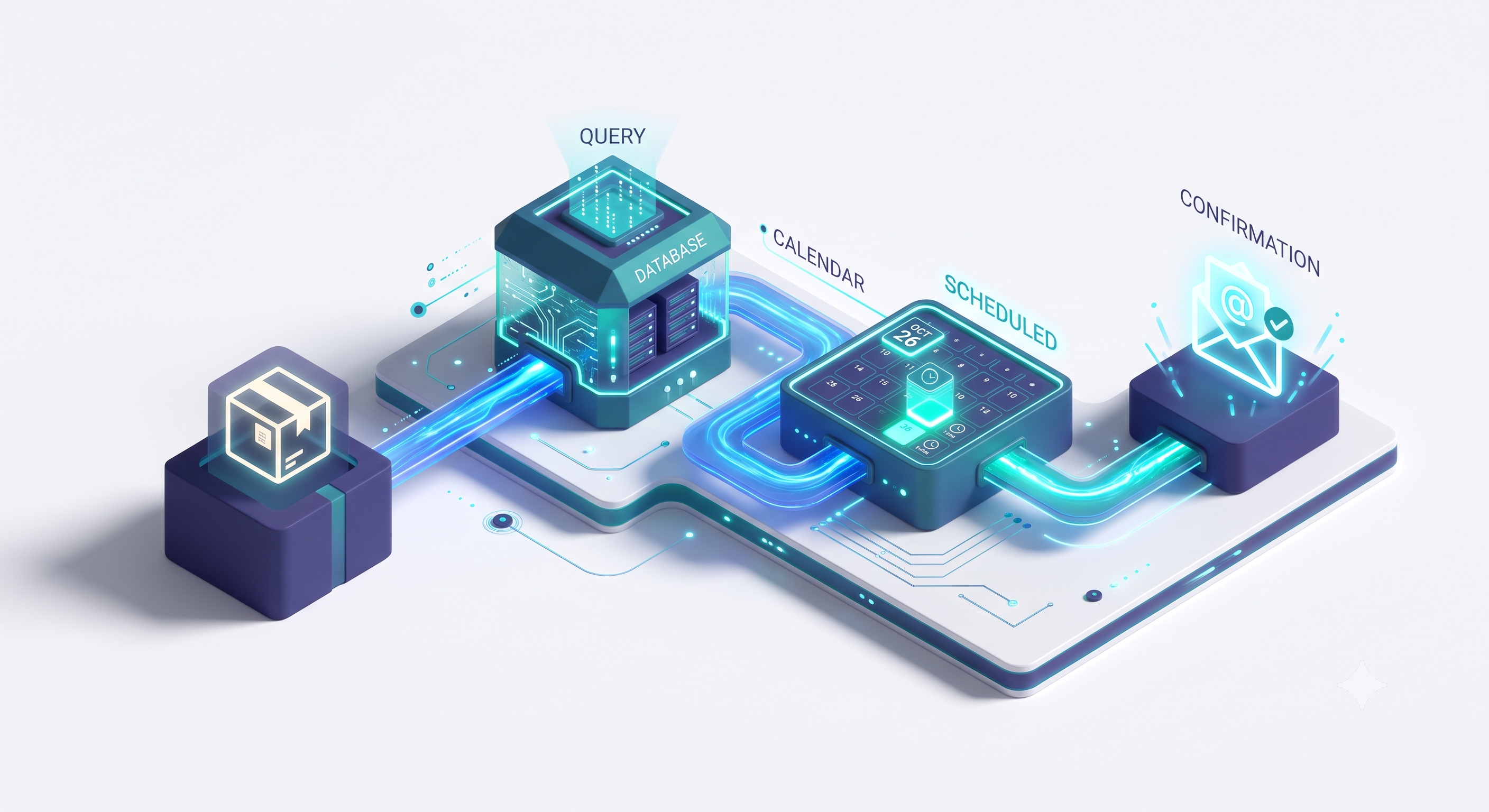
How AI agents are moving from chat to real action for Australian business
Gemini's new Interactions API lets AI agents take real actions, not just chat. What agentic AI means for Australian SMEs and where to start safely.

How AI cybersecurity is starting to find and fix flaws for Australian small business
OpenAI ships AI that finds vulnerabilities and writes the patches. What closed-loop AI cybersecurity means for an Australian SME with no security team.

How AI is changing construction management for Australian builders
What AI in construction management actually does for Australian builders and developers, where it pays off first, and how to adopt it without the hype.
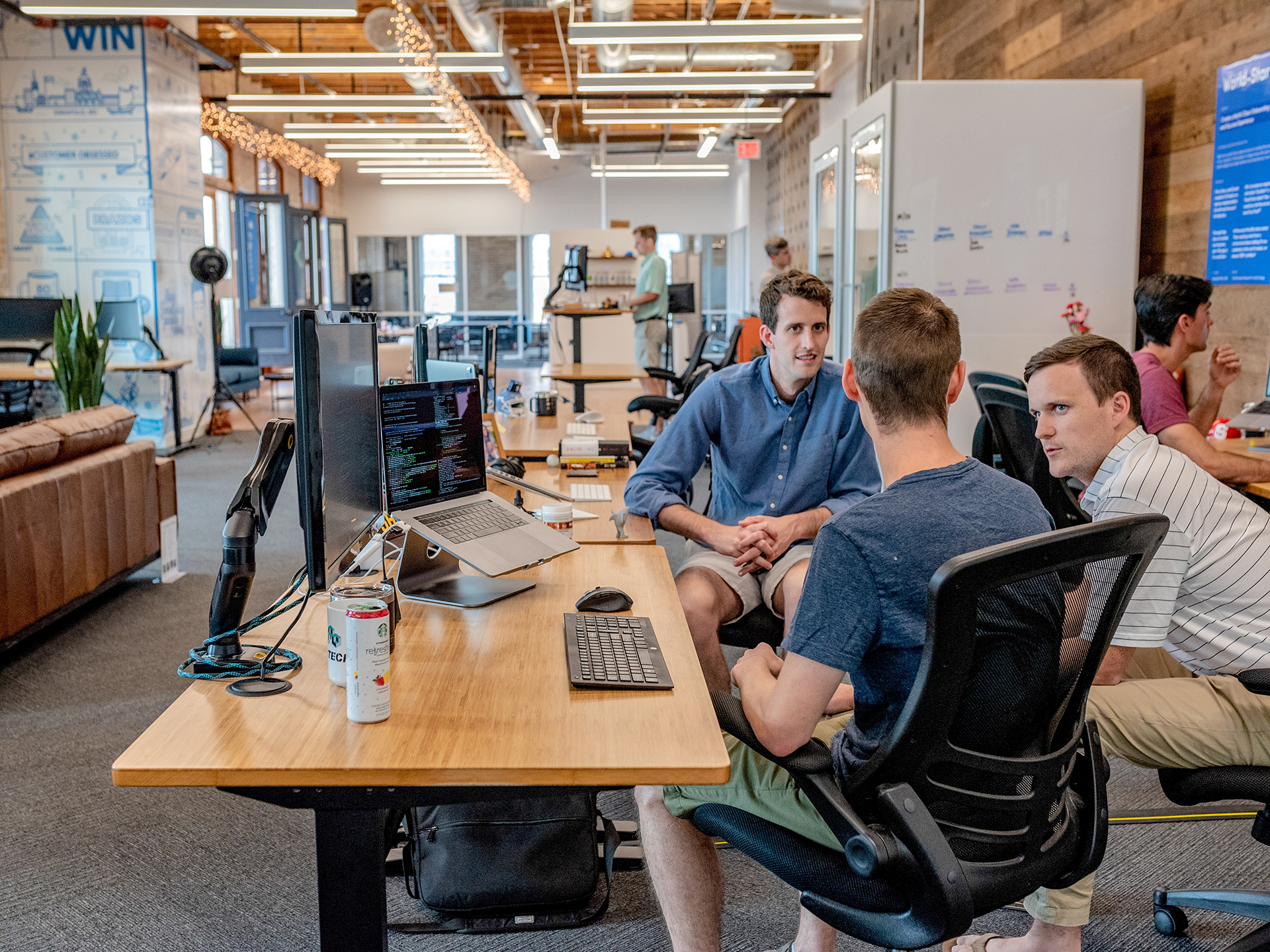
How AI software development is changing the way Australian SMEs build internal tools
A practical look at AI coding for Australian SMEs, what AI coding agents do well, where they create tech debt and security risk, and how to use them safely.

A practical guide to AI governance for Australian SMEs
An audit of 21 AI judge models shows simple agreement scores overstate AI quality. How Australian SMEs can check and govern the AI that makes their decisions.
What open-source ai means for smaller Australian businesses
A SpaceX compute deal is funding new open-source AI models. When open-source AI saves money for Australian SMEs, and when a commercial API still wins.