Australian teams bought whole-team AI licences with no way to measure the return. Why that isn't real change, and how to make the spend count.
Early in 2026, a lot of Australian teams did the same thing at once. They bought everyone an AI licence. Not a trial for one department, but a top-tier subscription for every person, signed up in a week. It felt like the thing you had to do to keep good staff and stay in front. If your team was still on a basic tool, you were behind. Six months on, the bill is real. You’re paying for AI across the whole team, and the question of what you got for it is starting to land. If you’re the one who signed off on that spend, this piece is written from your seat. The short answer is that buying licences was the easy part. Proving they returned anything is where most teams are now stuck, because nobody set them up to measure it.
What the licence spend actually bought
Individual people did get faster at parts of their work. That much is real. Someone drafts an email quicker. Someone gets a first pass at a report in minutes instead of an hour. On any given desk, the tool feels useful, so the sense that this was money well spent is easy to come by.
The trouble is that a feeling isn’t a figure. When productivity ticks up on one screen, a leader reads it as a signal that the whole spend is working. What that signal doesn’t show is whether the business is any better off, or by how much. We recently worked with a 15-person professional services firm that put a top-tier AI licence on every desk for about $60,000 a year. Ask that firm what the money returned and the room goes quiet. Nobody can say which tasks got faster, by how much, or whether any of the saved time turned into more work done or more clients served.
The wider numbers show how normal that is. MIT’s Project NANDA found that 95% of generative AI pilots showed no measurable impact on the profit and loss statement. McKinsey’s State of AI 2025 found only 6% of companies get a significant profit impact from AI. The models aren’t the problem. That small group uses the same tools as everyone else. The difference is what they built around them, which is exactly the sort of work an AI integration service for professional services exists to do.
Why you can’t measure it yet
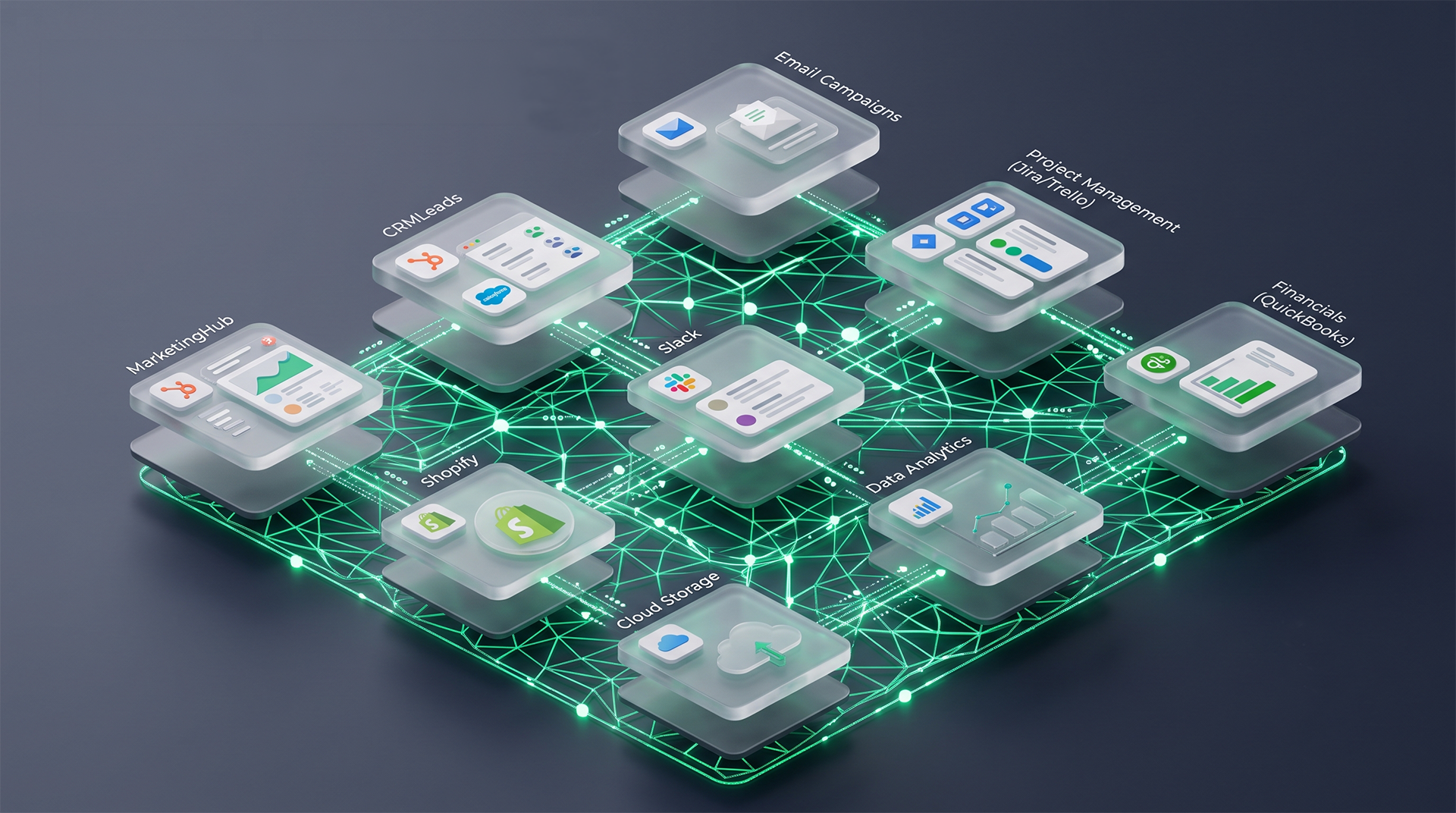
You can’t measure it because the AI is sitting next to the work, not inside it. Each person opens a chat window, does something useful, and closes it. Nothing is kept. There’s no record of what was asked, what data went in, what came back, or how many tries it took to get there. So even the person using it couldn’t tell you their own hit rate, let alone the firm’s. OpenAI’s own economics team gave this a name. They call it the micro-productivity trap, where a business speeds up single tasks without changing how the work flows, so the gains never add up across the whole company. You can have a team full of people who each feel faster and a business that produces the same result, because the way work moves through the firm never changed.
There’s a plainer name for the pattern too. It’s called AI washing, where the story about AI changes while the way the business actually runs stays the same. A simple test cuts through it. Ask four questions about your AI spend. Which decisions are made differently now? Which approval steps went away? Which responsibilities moved? Which of your old measures stopped mattering? If the honest answer to all four is none, you bought AI. You didn’t change how the business runs.
AI isn’t a one and done
Here’s where a lot of the early spending went wrong. Teams treated AI like the last big tech change they lived through. A move to the cloud, or a rebuilt website, was a project with an end. You did it once, and then it was finished. AI doesn’t work like that. Getting a real return means putting AI inside your actual processes, one at a time. You map how a piece of work gets done today, find where AI can carry part of it, build that in, and measure what it saves. Then you take the next process and do the same. Because you measured it, you can come back each month and find a better way to run it. The benefit builds over time, and it stays with the business instead of living in one person’s chat history.
That’s ongoing work, and it’s the reason this is worth doing with a technology partner rather than alone. Putting AI into how your firm runs, and keeping it measured, is the kind of work our AI integration service is built around. It’s also fair to say what this won’t do. AI won’t run your business for you, and a partner can’t fix a process you’re not willing to change. A person stays accountable for every decision that matters. The point isn’t to hand the work over. It’s to make sure the money you’re already spending on tools like Claude actually shows up in the business.
What this means for you
The reckoning is coming, and it’s simple. Over the next six to twelve months, someone is going to ask what the AI spend returned. Most teams can’t answer, because there’s no measurement underneath it. And if you can’t measure it, for the business it may as well not exist. A cost with no proven return is hard to defend, whatever the tool. This is already happening at scale. S&P Global found 42% of companies abandoned most of their AI plans in 2025, up from 17% the year before.
The better news is that the spend isn’t wasted. That 15-person firm doesn’t need to cancel its licences, and neither do you. The tools are fine. What’s missing is the layer that turns them into a result you can see. It starts with one slow, costly process, AI built properly inside it, and a measure of what changes before anyone goes further. If you’d like help finding where to start, take our AI Roadmap Interview. You’ll talk through your team’s goals and where the time and money go, then get a plan built around your business.