Mid-market firms with real IP and client records don't have to send their data away to use AI. Sovereign and hybrid deployment keeps your edge in-house.
Most AI vendors have the same opening pitch. They show you what the AI can do, then they tell you what they need to make it work. And what they need, almost without exception, is your data.
For a professional services firm carrying a decade of client records, proprietary methods, and commercially sensitive work, that’s not a small ask. It’s the whole business. A COO who has spent years building that data asset doesn’t hand it to a third party because the demo looked good. So the AI conversation stalls, the board keeps asking, and the firm stays stuck.
The stall is real, but the choice isn’t as binary as the vendors make it sound.
The data leaves, and so does your edge
The concern isn’t paranoia. As one practitioner put it plainly: “You cannot outsource your data architecture. It’s so dangerous… it’s like giving somebody the keys to your house.” Another framing from the same body of thinking, enterprises have already given up a lot of their competitive advantage to third parties, and they need to practise discernment about what stays behind the firewall.
For a mid-market firm, the data that makes the AI useful is often the same data that makes the firm valuable. Client history, pricing logic, process knowledge, proprietary research. Feed that into a shared cloud model and you’ve moved your edge off-premises. The AI gets smarter on your material, but so does the next firm that uses the same service.
The Australian Privacy Act 1988 adds a harder floor. If your data includes personal information about clients or staff, you have obligations about where it’s stored and who can access it. “The AI vendor is reputable” isn’t an answer the Australian Privacy Principles accept.
What sovereign and hybrid deployment actually means
Sovereign AI deployment means the AI runs inside your own infrastructure. The model sits on your premises or in a private environment you control, and your data never crosses to a third party. It’s the right call when the data absolutely cannot leave.
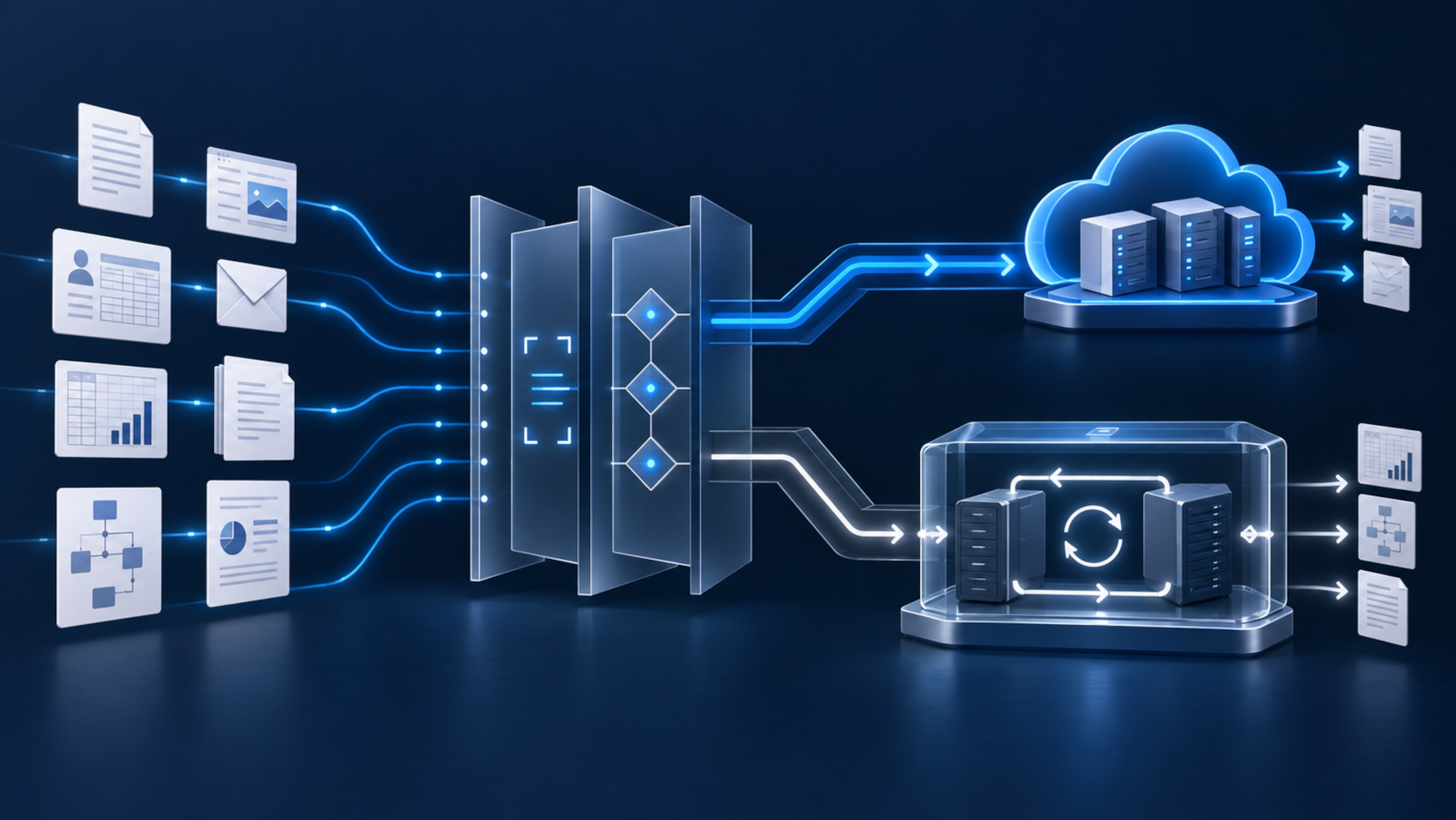
Hybrid sits between cloud and sovereign. Cloud AI handles the work where data sensitivity isn’t the issue, and the data that must stay controlled stays on your own infrastructure. Most mid-market firms land here, because not everything they do is equally sensitive. Routine drafting, summarisation, and research can run in the cloud. Client records, financial models, and proprietary methods stay local.
The deployment spectrum runs from cloud at one end to fully sovereign at the other, and a good Technology Partner helps you draw the line in the right place rather than defaulting to whichever end is easiest for them.
What surrounds the model matters more than the model itself
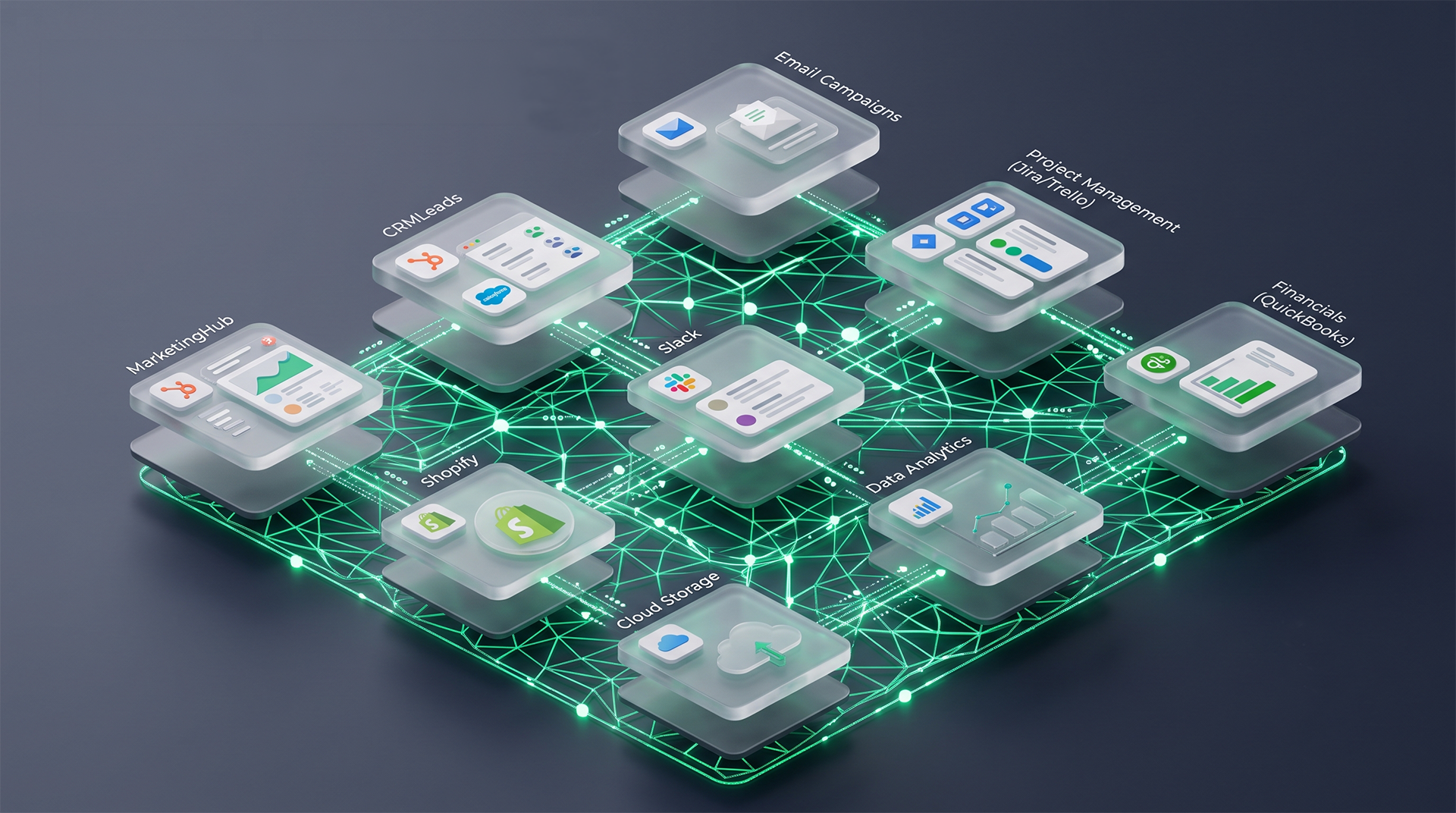
The AI model is the smallest part of the problem. What makes AI actually useful in a business is everything built around it: the data pipelines that move information to where the AI can use it, the data lakes that give it a complete picture rather than scattered files, the agentic harnesses that let AI agents carry out real work reliably, and the process mapping that points the AI at the right work in the right order.
For a firm running sensitive data, all of that infrastructure has to be built with data residency in mind from the start. An AI agent that reasons over your client records needs to do that reasoning inside your walls, not by sending a query to a cloud endpoint and waiting for an answer back. The research framing for this is precise: data is no longer something you analyse ad hoc, it’s the necessary context agents need to act. If the agents are acting on your most sensitive context, the infrastructure has to match.
This is where the professional services firm runs into trouble. They had a cloud AI pilot running on non-sensitive data, and it worked. But the work they most wanted to automate, the review and synthesis of client-specific material, couldn’t go near it. The pilot sat in one corner of the business while the real problem stayed unsolved.
The fix wasn’t a better cloud model. It was building a hybrid layer: cloud AI for the commodity work, a private AI environment for the client-facing work, and data pipelines connecting both to the firm’s existing systems without pulling data out of the controlled environment. The firm’s proprietary methods and client records stayed on-premises. The AI reasoned over them there.
Vendor lock-in makes this worse
Most enterprise AI vendors don’t just want your data. They want your processes to run their way. A firm that has bent its workflows around one vendor’s platform for a decade knows how that ends. You stop making decisions based on what’s right for the business and start making them based on what the platform supports.
An anti-lock-in approach keeps the firm’s data, prompts, and workflows separate from any single model. That means the firm can move to a better model as the field changes, without rebuilding everything. It also means the AI is shaped around how the firm actually works, not around what a vendor’s product team decided was the standard workflow.
Model-agnostic infrastructure is a practical benefit, not a marketing position. The AI field moves fast enough that the best model today probably won’t be the best model in two years. A firm that owns its stack can keep pace. A firm locked to one vendor’s mould can’t, without paying to migrate again.
What this means for you
A firm with real IP, client records, or regulated data doesn’t have to choose between using AI and keeping its edge. The choice is really about how the infrastructure is built and who builds it. Cloud AI for the work that can run there, sovereign or hybrid for the work that can’t, and everything documented in a shared workspace so nothing depends on one person’s knowledge.
The firms that get this right don’t start with the model. They start with process mapping, working out which data is sensitive, where it lives, and what the AI needs to do with it. That tells you where the line sits between cloud and on-premises, and it gives you a build plan that doesn’t require you to hand over the keys.
If your board is asking about AI and your first concern is where the data goes, take our AI Roadmap Interview. You’ll talk through your data situation, your goals, and your concerns, and get a clear plan for where to start without putting your edge at risk.