Cohere's research shows AI agent teams outperform single agents on complex tasks. Here's what that means for Australian enterprise AI roadmaps in 2026.
Coordinated teams of AI agents now outperform single agents on complex tasks. That’s not a vendor claim. Researchers at Cohere published a study in October 2026 showing exactly that: well-organised agent teams delivered significantly better results than single agents on difficult coding work. The study used coding because the outcomes are measurable and verifiable. The signal it sends goes well past software.
We work with a large multi-site services business that spent most of 2025-2026 running a single AI agent against its internal reporting workflow. The agent handled the easy, well-structured queries reliably. When a report required pulling from three systems, reconciling conflicting data, and flagging exceptions for a human reviewer, the single agent either stalled or produced output that needed more correction than the manual process it replaced. The business had good AI. It had the wrong architecture.
What the Cohere findings actually change
The standard advice for enterprise AI in 2026 is still largely “start with a use case, pick a model, run a pilot.” That framing treats AI as a single capable assistant dropped into a workflow. The Cohere research points somewhere different: the performance gains come from how agents are organised relative to each other, not from finding a better individual model.
That matters for how enterprises allocate budget and attention. Most of the spend in a typical enterprise AI programme goes on model selection, prompt engineering, and the governance layer around a single agent. Very little goes on the coordination architecture, the question of which agent hands off to which, under what conditions, and with what verification in between. The Cohere findings suggest that’s where the performance gap actually lives.
The practical implication isn’t that every enterprise needs to deploy dozens of agents immediately. It’s that the design work, the process mapping that determines how a multi-agent system should be structured, is the work that determines whether the investment pays off. Businesses that skip it and deploy single agents against complex processes will hit the same ceiling our multi-site client hit.
The build-versus-partner decision in this context
For a 200-plus staff business, the question that follows the Cohere research is usually framed as a hiring decision. Do we bring in a Head of AI and build a team beneath them, or do we find a partner who can do this?
The honest answer is that the sequencing matters more than the choice. A senior AI hire at this level takes six to twelve months to recruit, and that’s before the role has the process maps, data pipelines, and agent infrastructure needed to be productive. An AI Strategy engagement can start process mapping this month, build the coordination architecture while the business is still deciding on the hire, and hand over a documented, running system when the right person eventually arrives. The hire inherits a functioning operation rather than a blank page.
The risk in hiring first is that a Head of AI arrives into an organisation where the foundational work hasn’t been done, and spends the first six months doing it. That’s an expensive way to do process mapping.
What the Cohere research adds to this conversation is a clearer sense of what “foundational work” actually means. The design work covers how the agents in a system relate to each other, which tasks each one owns, where human review sits in the chain, and what happens when one agent’s output is ambiguous. That’s AI Transition Leadership work, and it requires both technical and organisational capability to do well.
What didn’t resolve for our multi-site client
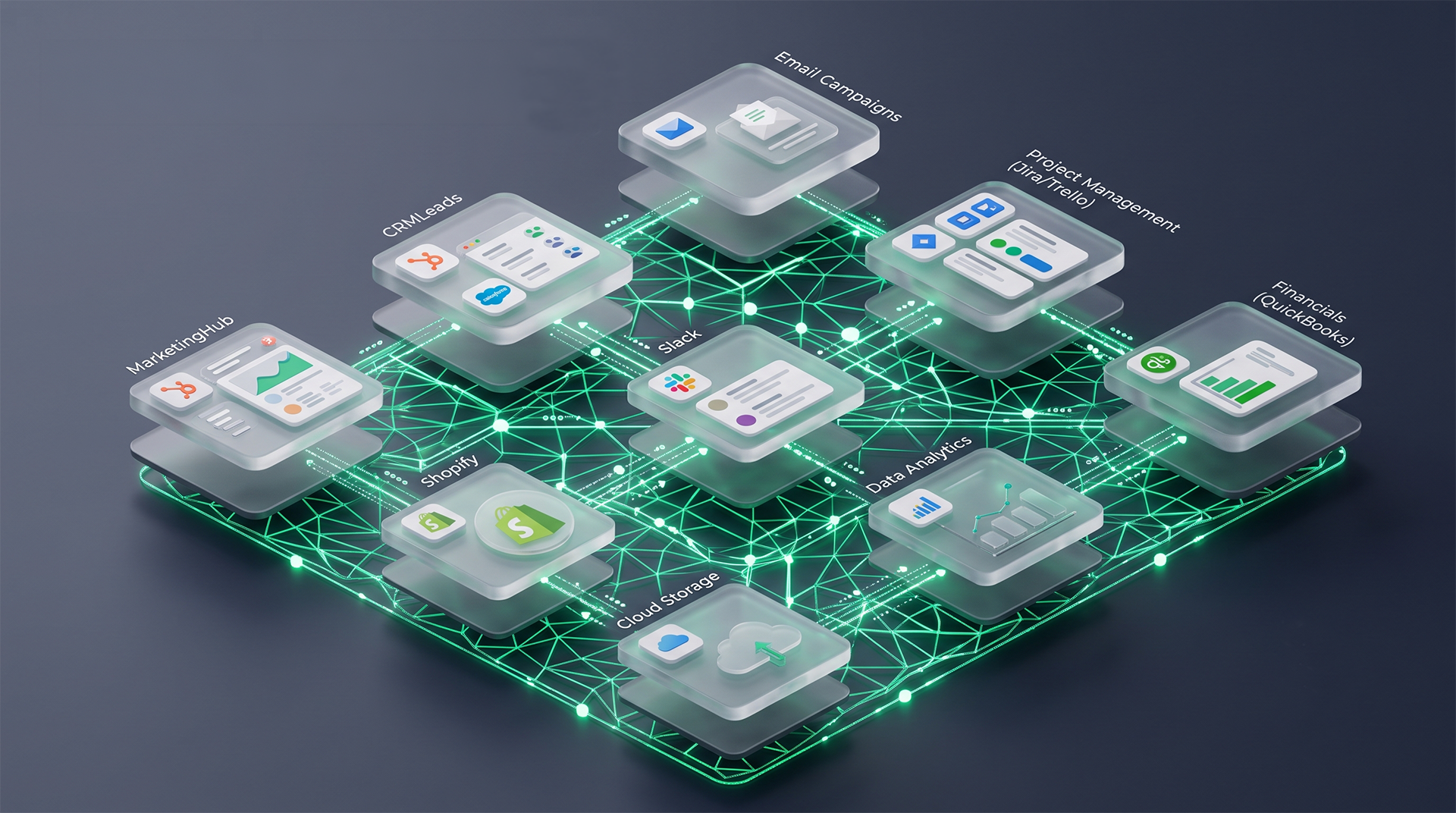
The business we work with eventually moved to a structured agent team for its reporting workflow. Three agents now handle different parts of the process: one pulls and normalises data from each source system, one reconciles and flags exceptions, and a human reviewer works from the flagged list rather than the raw output. The time from data pull to reviewed report dropped from a full day to under two hours, measured across the first quarter the new architecture ran.
Two things stayed unresolved. The agents still can’t handle reports that require judgement about which exceptions matter most on a given day. A senior analyst makes that call, and the system is designed to surface the exceptions clearly rather than rank them. The business also runs a legacy system in one of its regional offices that doesn’t expose a clean API, so that site’s data still enters the pipeline manually. Both gaps were known before the build started, and both were factored into the design rather than discovered after deployment.
That last point is the one most enterprise AI programmes get wrong. The gaps don’t go away when you deploy agents. The question is whether you found them during the design phase or after you went live.
What this means for you
The Cohere research doesn’t change what good enterprise AI looks like. It confirms what the architecture of good enterprise AI has always required: structured coordination, clear handoffs, and human accountability at the points where the work is genuinely ambiguous. What it changes is how easy it is to make the case internally for doing that design work properly, rather than deploying a single agent and hoping it scales.
If your business is weighing whether to hire an internal AI team or bring in a partner, or if you’ve already deployed AI and hit the ceiling a single-agent architecture produces, the AI agents for enterprise page on our website is a good place to see how we approach the coordination and governance layer.